


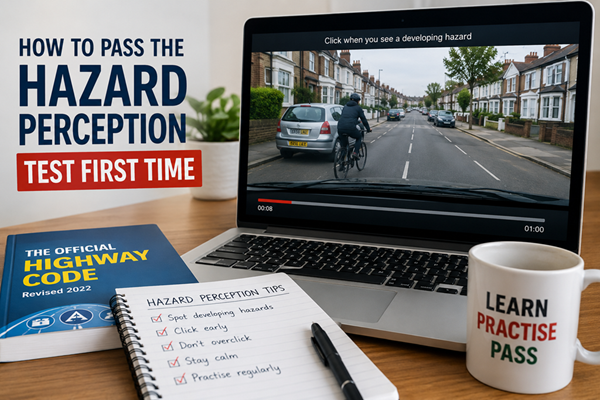
Passing the hazard perception test is a major step towards getting a full driving licence. Many learner drivers focus heavily on revising the Highway Code and practising multiple-choice questions, but the hazard perception section can catch people out.
The good news is that the test becomes much easier once you understand how it works and what the examiners are looking for. If you are preparing for your theory test in Manchester, these practical tips can help improve your chances of passing first time.
What is the hazard perception test?
The hazard perception test is the second part of the UK theory test. It is designed to assess how quickly you can spot developing hazards while driving.
You will watch a series of video clips filmed from the driver’s perspective. During each clip, you need to click when you notice a developing hazard.
A developing hazard is something that could cause the driver to slow down, stop, or change direction. Examples include:
- A pedestrian stepping into the road
- A cyclist moving around a parked car
- A vehicle braking suddenly
- A car pulling out from a side road
- Traffic building up ahead
The earlier you identify the hazard, the more points you score.
Why learners fail the hazard perception test
Many learners fail because they either click too late or click too often.
The test software is designed to detect random clicking patterns. If you repeatedly click without reacting to actual hazards, the system may award zero points for that clip.
Another common problem is misunderstanding what counts as a developing hazard. Spotting a parked car alone is not enough. The hazard develops when something changes around it that may affect your driving.
Learn how the scoring works
Each hazard clip is scored out of five points.
- Clicking very early earns five points
- Slightly later reactions score four, three, two, or one point
- Clicking too late scores zero
Most clips contain one developing hazard, but one clip includes two.
Understanding the timing is important. You do not need to click the second you see something. Instead, click when the situation begins to develop into a possible danger.
Practise with real DVSA clips
One of the best ways to prepare is by using official DVSA hazard perception clips.
Practising regularly helps train your eyes to scan the road properly. It also helps you understand how hazards develop in real driving situations.
Try to practise in short sessions rather than cramming everything into one evening. Consistent practice improves reaction times and concentration.
Focus on road awareness
Strong hazard perception skills come from good observation.
When watching clips, keep scanning:
- Junctions
- Pedestrian crossings
- Parked vehicles
- Cyclists
- Brake lights
- Side roads
- Road signs
Learners who focus only on the centre of the screen often miss hazards developing from the sides.
Avoid overclicking
Some learners panic and click repeatedly throughout every clip. This usually causes more harm than good.
A better approach is to use a steady clicking technique:
- Click when you first notice the hazard developing
- Pause briefly
- Click again if the hazard continues to worsen
This method helps avoid missed scoring windows while keeping your clicks natural.
Stay calm during the test
Nerves can affect reaction times.
On the day of the test:
- Get enough sleep the night before
- Arrive early at the test centre
- Read the instructions carefully
- Stay focused between clips
Treat the clips like real driving situations rather than a computer game.
Hazard perception skills help beyond the test
Hazard perception is not just about passing the theory test. These skills help keep drivers safe on the road every day.
Good drivers constantly anticipate what could happen next. Learning this early helps learners become more confident and aware drivers once they start practical driving lessons in Manchester.
At Adams Driver Trainer, instructors help learners improve observation and planning skills during both manual and automatic driving lessons. Developing strong awareness on the road can make both the theory and practical test far less stressful.
Final thoughts
Passing the hazard perception test first time comes down to preparation, observation, and understanding how hazards develop.
Practise regularly, avoid random clicking, and focus on reading the road ahead. The more familiar you become with real driving situations, the easier the test will feel.
If you are preparing for driving lessons in Manchester or getting ready for your theory test, Adams Driver Trainer can help you build the confidence and road awareness needed to succeed.